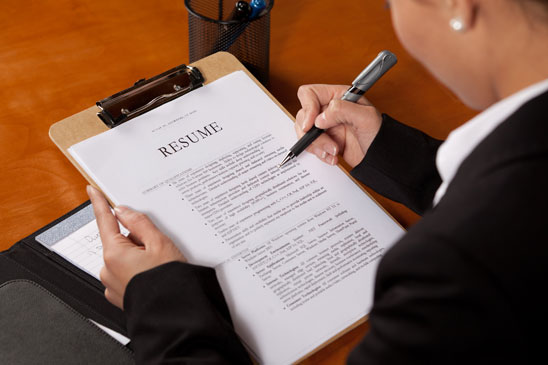
5 Elements of a Mediocre Resume – Hello Again, Trash Can …

Where does your resume end up?

Where does your resume end up?

Guest Author: A nationally recognized resume expert, Jessica Holbrook Hernandez is President/CEO of Great Resumes Fast and a former human resources manager and recruiter.
Website: http://www.greatresumesfast.com

Has a lackluster resume response rate left you wondering if your resume or the job market is to blame for your shortage of interviews? Take a quick look at my list of five basics of a mediocre resume to help determine if your resume is to blame for your interview famine.

Mediocre Resume Component #1 – A vanilla, undistinguished introduction or profile. If the introductory statement on your resume could describe someone else—anyone else besides you—then you haven’t branded or customized your introductory statement well enough.

Mediocre Resume Component #2 – An omitted job target or job title. By neglecting to include a job title or target job position at the beginning of your resume you’re making the employer guess which position you’re applying to and what you’re qualified to do.

Continue reading 5 Elements of a Mediocre Resume – Hello Again, Trash Can … »


Resume Phrases – Admissions Office Worker

Here are a handful of resume phrases that college students or recent grads with Admission Office experience may find useful:

  • Represented university to campus visitors, including prospective students, parents, alumni and community members
  • Answered questions about ____ College and local community
  • Wrote original content for Admissions Blog, read by prospective students and parents
  • Helped set up for special visit days and Admissions events


Continue reading Resume Phrases – Admissions Office Worker »


The Top of Your Resume: Objective or Professional Profile?

Guest Author: Jeffrey Metzger
Website: http://www.yourresumeconsultant.com

I’ll preface by acknowledging that there are as many opinions about this subject as there are resumes in circulation. You will always need to do what’s best for you in your job search.

That said, my opinion and that of many career professionals is that an objective on a resume is an outdated and ineffective element.

An objective, in most cases is about you. What you want and the job you’re hoping to find. After all…it’s your objective. Today’s resumes are not about you, they’re about your next employer. What they want and how you can solve their business opportunity.

A well-written professional profile tells your next employer (or recruiter, or HR professional) what you can do for them. It describes your unique talents and value proposition. Try and stay away from tired and overused language like “excellent communicator” and ability to “multi-task”. How you ever met anyone who doesn’t claim those skills?

The top of your resume is prime real estate. The most impactful words and phrases should be there. It’s up to you to capture and hold the reader’s attention and make them want to read further. It’s my opinion that a strong professional profile is the best strategy.

Article courtesy of the Recruiting Blogswap, a content exchange service sponsored by CollegeRecruiter.com, a leading site for college students looking for internships and recent graduates searching for entry level jobs and other career opportunities.


Resume Trends of 2012- What to Follow and What to Discard

Guest Author: Mark Larson
Website: Resume Index
Anyone who has made a resume would know how confusing it is. Everyone you consult or discuss your resume with has some opinion or another about what information it should include and how it should be laid out. However, there are some aspects of a resume that everyone would agree with. These aspects change with time, and the beginning of a new year brings with it some new trends in resume building. Here are some of the latest aspects of resume building that will help you craft a resume suitable for 2012:

1.      Get Rid of the ‘Objective’ Statements
There was a time when a good resume was recognized by the presence of a career objective or a professional summary, or even both. This year, the practice of including such statements has died out for the simple reason that they waste a lot of space on the resume. Minimalistic statements are the latest trend in resumes this year, so it is time you cut down your elaborate objective and summary statements to a single line that says how the position being applied for will help in moving your career forward. You need to get to the point quickly and begin with relevant facts for job applications, like your professional achievements.

2.      Add Facts and Figures
Another trend is the addition of concise facts and figures in your resume. These figures have to be real, of course, and indicative of your achievements. For example, you can say that you increased the sales in your region by ‘20%’ instead of writing ‘substantially’. This year, it is time to bring down the number of broad and generic terms used in your resume and add concrete numbers as proof of your abilities. You can get ideas for ways to do this by looking at resume examples online.  This makes your resume seem more realistic rather than a sales pitch.

Continue reading Resume Trends of 2012- What to Follow and What to Discard »

A sample text widget

Etiam pulvinar consectetur dolor sed malesuada. Ut convallis euismod dolor nec pretium. Nunc ut tristique massa.

Nam sodales mi vitae dolor ullamcorper et vulputate enim accumsan. Morbi orci magna, tincidunt vitae molestie nec, molestie at mi. Nulla nulla lorem, suscipit in posuere in, interdum non magna.